“All that man needs for health and healing has been provided by God in nature, the Challenge of science is to find it.” ~ Paracelsus.
I’m feeling a bit better so I get dressed, package this nasty meat up into three bags, hang it on a handlebar (because remember, I’ve broken my bike basket already) and head to the butcher shop. I picked up new meat, then headed to one out of 12 grocery stores that have bike baskets. While headed to that grocery I ran into my old pal Joseph, who I’ve known all of seven days. He’s an older guy that works for the city or council or something and he’s out a lot when I’m running around. He’s full of useful and usually helpful information, but sometimes none of it makes sense. He asked how I was and I told him I had been sick for a week but am finally feeling better. This led to a team hunt for tea at the nearest grocery store. Then a shout out to a woman through a red screen door on a side street he thought could help me, but she screamed back that she was on the phone, and her tone didn’t sound like she wanted to help anyone.
This led to a short plant medicine walkabout and lecture, from Joseph himself, and involved putting plants in my mouth, not knowing at all if it was poison or truly a healing substance. I thanked Joseph as usual for his information, but also wondered if I would die of plant poisoning on the way to the grocery store, or not. As you can tell by the context and sometimes ocean-wave-brain verb tense confusion, I did not after all die from biting into that plant. Joseph says if the birds can eat it so can you, NOT the bats. He pointed to a tree right next to the fence where he was showing me the wild sorosi. The “bat tree” – maybe a date or nut of some sort, I’m still not sure,
I went home to research the leaf I ingested and it turns out that plant was sorosi. It is known for exactly what Joseph said it could do: “cleans the blood.” He was very specific about how to use it, saying the leaves had to be placed in a cardboard box and dried in the sun, steep the leaves then filter them out of the tea water.
This research led me down a deep rabbit hole, finding names of plants native to Belize that I could possibly use to my advantage to not only cure my current sickness but to adjust to and stay healthy in the tropical climate.
The island I live on is only five miles long and one mile wide, with very limited resources – and that is an understatement. Ambergris Caye, the island north of us where the village of San Pedro is located, is 25 miles long and offers much more in terms of necessities, shopping, food items, and health resources. But it also has a fair amount of crime lately, especially for a place so small, and an island no less.
And Rasta has a good job on the island we live on so switching, even to the north side of our own, isn’t an option. So for now we stay. We have already talked about moving to the mainland in the future. His heart has always belonged to the mainland, the rivers, the earth there, and my heart is with the sea. Our compromise would be a small town on the mainland, on the eastern coast of Belize.
I clearly ran off on a tangent there for another day. My point above was that I need access to the plant medicine and we will have to look for these items when we head to the city (Belize City) for provisions. We’ve needed to go for weeks but I was sick and him on night shifts, sleeping during the day, makes it tricky. I need more kitchen towels, bath towels, sheets! I finally washed one set of sheets with towels and watched the weather prediction, thought we were clear of a daytime rain burst, hung the clean items on our lines, got to the cafe to write and the rain started. Really?! Rain is beautiful but I am so damp, my lungs are wet, my feet are swollen and now, my sheets. May have to sleep in the hammock tonight!
Below the photos of my pal Joseph showing me plants, I’m going to drop some information I found on a few of the plants that might be of use to me later. You may find these plants interesting as I do, at least some of the names!
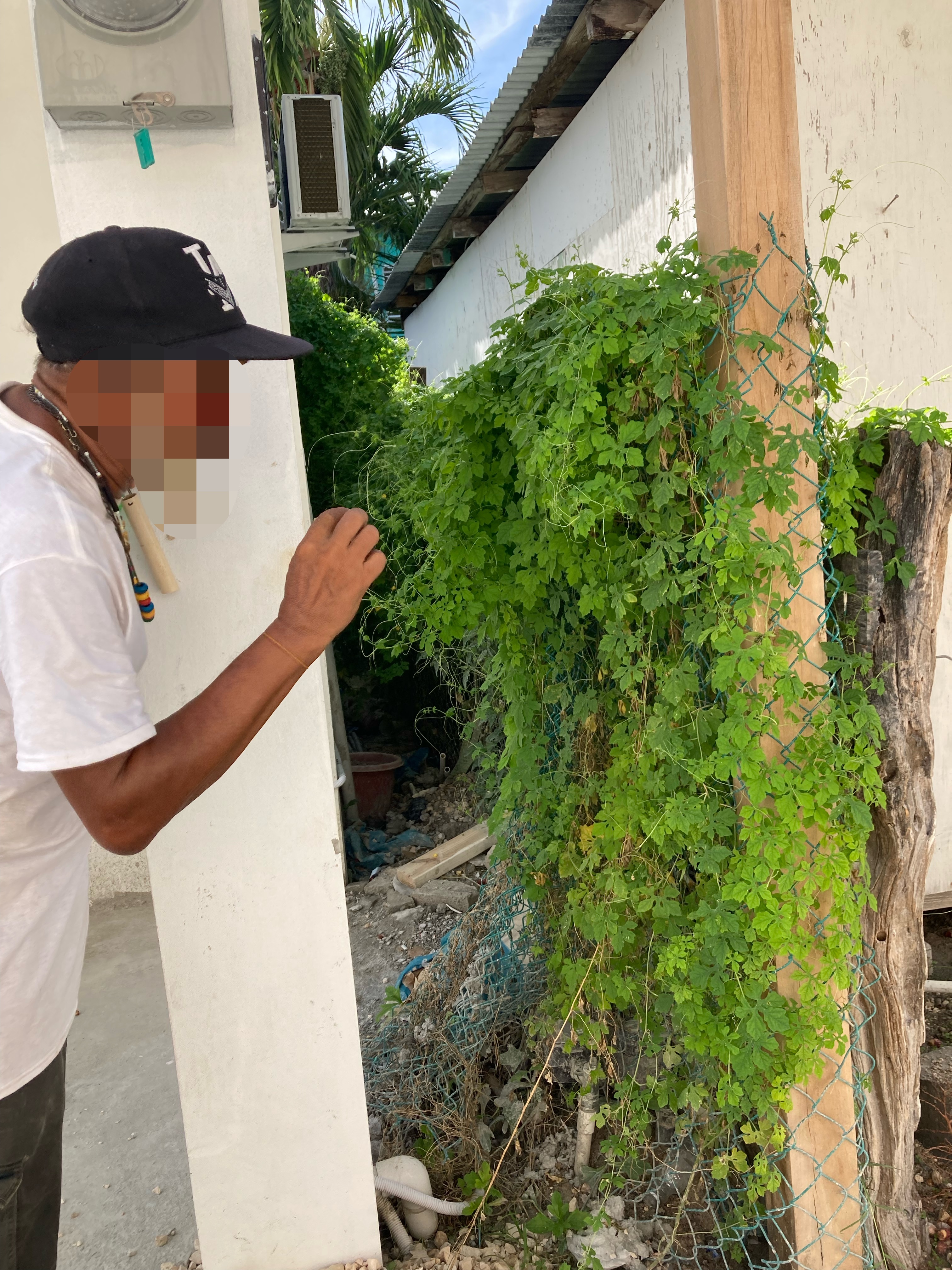

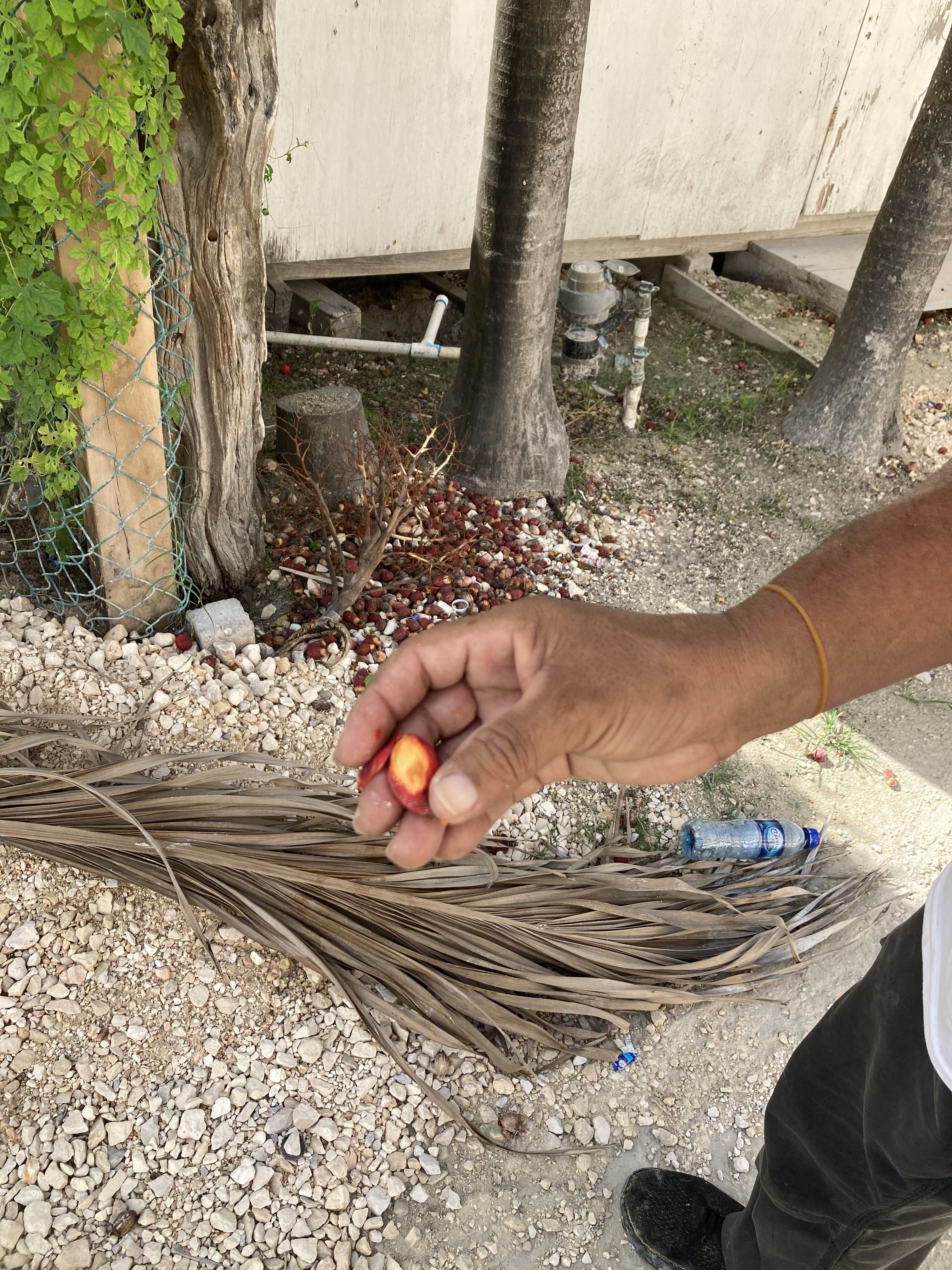

“SOROSI”, also called “condiamor”
The most renowned plant medicine of Belize is “sorosi”, also called “condiamor”. This vine is used as a household tonic for the treatment and prevention of parasites and dysentery, and for the treatment of delayed or painful menses. A handful of leaves is boiled in 3 cups of water for 10 minutes; the patient then drinks 1 cup of this three times per day for ten days. Bathing in a tea of sorosi is a treatment for ticks or lice.
“Sorosi might be one of those wonder plants you hear about. It’s pretty widely revered all over Central America, grows wild and is said to combat side-effects of ailments linked to diabetes. A “blood cleaner” people call it anecdotally, it’s used widely to fight and prevent parasitic infections.”
“The sorosi plant is known for its cleansing properties, especially after having consumed a lot of sweets. It is said that it actually cleans the blood and it is assumed that the tea possesses agents which fight against diseases related to diabetes, cholesterol and other viral and bacterial infections.”
JACKASS BITTERS (NEUROLAENA LOBATA)
Jackass Bitters is a well-respected plant that has been used widely in traditional Central American medicine. It has yellow flowers and bitter-tasting leaves which contain a potent anti-parasitic agent (sesquiterpene dialdehyde) that is active against amoebas, candida, giardia and intestinal parasites. Traditionally, the herb is taken internally as a tea or a wine or used topically to bath wounds and infections, or as a hair wash to get rid of lice.
PISS A BED, SENNA ALATA, CAESALPINIACEAE
This is a flowering shrub, producing racemes of yellow flowers and can be found in yards and disturbed forests. Great name! Derived from its use as a traditional remedy to help urinary tract conditions. Throughout the day, one should sip on three cups of tea made from boiling and steeping the flowers. Drinking a leaf tea can help kidney ailments and liver congestion. Fresh juice from the leaves should be applied to skin diseases such as scabies and ringworm. In Guatemala, its common name is “Ringworm shrub”.
CONTRIBO (ARISTOLOCHIA GRANDIFLORA)
Contribo is a fascinating plant if for no other reason than that the huge flower smells like rotting meat. And as you might expect – it is fertilized by a fly! In Belize it is a popular remedy for colds and flu, stomach ache, and indigestion. It may be used as a tea, or is frequently seen soaking in rum as a “bitters” or, in Kriol, “bittas”. One can go into many bars and order a shot.
CHINA ROOT (DIOSCOREA VILLOSA)
This is a Wild Yam which has anti-spasmodic as well as anti-inflammatory properties and therefore aids and soothes numerous afflictions. Such as, muscular spasms and all types of cramping, labor pains, arthritis, colic, irritable bowel syndrome, diverticulitis, gallbladder, flatulence and gastric ailments, menopause symptoms and menstruation pains and bloating. These ailments are usually treated with infusions prepared from boiling the dehydrated roots that have been harvested in the autumn or by including the root extract in ointments, creams and capsules. In the laboratory Wild Yam can be chemically converted to progesterone contraceptives and cortisone. Wild Yam is not a form of hormone replacement nor a reliable birth control, though rumor believes it to be.
EPAZOTE
The miracle apasote or Epazote. It has been traditionally used to drive away evil spirit by simply brushing the leaves on the possessed victim. But the true use of this herb is twofold. First it was used to cure children who just did not stop peeing themselves in their sleep. Mom would actually wake up a wet child and lash him in the area of his butt and legs and calves. Five or six lashings did the miracle but some stubborn children took as many as a month’s worth of lashings before they learned to wake up and ask for the potty. Yet another famous use of the apazote was to cure “chilio”or tantrums. What caused certain children ‘only’ to have tantrums is unknown but what is known is that a good whipping with a branch of the apazote herb was indeed a cure for these tantrums. Very soon after several of these lashings, the almost demonic crying child was as peaceful and harmless as a lamb. No more shouting, or punching of posts or banging of head unto walls. The mention of the word “apazote” and there you had a “little angel”.
OREGANO GORDO (OREGANO AMERICANO)Oregano grueso or Oregano gordo? (thick oregano or fat oregano) Regular oregano is the seasoning herb in various dishes. Now the oregano gordo, also called oregano Americano, is different in that its leaves are quite large and thick, thus very juicy. This leaf is heated over a flame and when rolled/rubbed between the palms of the hands, it produces a clear liquid or sap. Did you know that this is the perfect and almost instant cure for an earache? Just tilt the head sideways and allow some drops to flow into the ear in pain and almost miraculously the pain is gone.
https://belize-travel-blog.chaacreek.com/2017/10/belize-traditional-healing/


Leave a Reply