Since arriving in Central America I’ve had to really push past a lot of my hang ups such as fear of human germs, because I keep taking peeled fruit from strangers. An abundance of travel on public transportation involves not only overcoming motion sickness but all of the usual sights, sounds and scents that come with it. As explained in the previous post, getting comfortable and adjusting to changes isn’t an inherent strength for a highly sensitive person (HSP).
What I’ve experienced in the last few decades is that it’s not only possible, but I’m really good at it. From brunch with Amish friends to Hell’s Angels parties you can actually stick me anywhere and I will make friends and create community, which is what I’ve tried to do over the last couple of months here in Belize. As with different cultures you have to find common ground which isn’t hard, we’re all human after all. But there are stark differences in the way Central Americans move and think, opposed to how I was raised and lived back in the US. One of the hardest things I have to reconcile with myself now on a daily – sometimes hourly – basis, is that nobody is going to operate on my timetable or move the way I do. Not here, not ever. Let’s face facts: not a lot of people operate this way in the US either but there is at least a modest percentage (maybe 40-60%?) as opposed to what feels like 1% of the population here and that might be an exaggeration. There are ideals and behaviors we are exposed to and that are even bred into us in Western culture that aren’t even concepts Central Americans place high on their list. These concepts certainly couldn’t easily be put into practice down here either. Overall, values we place high on our scale in the US are individual freedom, autonomy, and personal achievement, whereas Central American culture puts more emphasis on family, a slow pace to life and togetherness. Meals don’t come quickly, as everything is prepared when ordered and directions are given instructing turns at cows, bridges or tortilla stands (not always but much of the time). Do not get me started on what it’s like following the Belizean bus schedule!
Too late. You got me started.
Rasta and I spent five days on the mainland recently and had to use buses to get around. This was sort of a kamikaze mission because the whole country and most of Central America and the Caribbean is getting hit with record rains and flooding making it incredibly difficult to travel, let alone leave the house. There was no way to predict if the weather would clear or hold long enough to enjoy any sightseeing. That was the week Rasta had off work and the only time I had available as well. It was time I toured around mainland Belize since I’d already been to three other countries to explore while living there. One island is not representative of the whole country – thank goodness.
With the rain and so many washed out roads and bridges, coupled with the price of renting a car, we decided to stay in nicer lodging and just take buses from place to place. I had just done this through Costa Rica, Mexico and Panama and while there are some uncomfortable buses (chicken buses), most were pretty decent for cross-country travel. There are several companies that mainly go to the same cities and bus stops, bus terminals in the major towns like Belize City, Belmopan and San Ignacio, maybe ten stations total. Somehow the bus driver and each assistant that accompanies them on every bus knows where to pick up and drop off. I’ve traveled through Mexico and three Central American countries now and I can’t really find the rhyme or reason to much of the routes, especially in Belize. There are little bus station waiting areas alongside rural roads in the middle of nowhere and the bus stops for each making a much longer trip than you’d think for such a small country. You also can’t always get on one bus and go all the way to your destination. Getting off at one stop to hop onto another bus was something we had to do a few times. The instructions are not clear on any of the bus company websites or Facebook pages – most don’t have an easy to understand website and just use Facebook. We relied on random strangers to help us get on many of the buses at the right time. I still haven’t mastered the “go slow” mentality in Belize. I’m trying so hard to slow down, and that statement right there of course defeats the purpose.
I would ask people and for the most part everyone is very helpful but also not many people were quite sure of the bus schedule and I think that is partly due to the fact that schedules can change the same day without much notice. The other somewhat nerve wracking component is that when Rasta asked someone for information, they’d be speaking Creole so I had no idea what was being said most of the time. I can catch some Creole conversations but most are happening so quickly that I can’t pick out useful words. Then I would have to follow Rasta to a different location to wait or quickly hop on a new bus. True to form I would have questions, to which he would respond, “Why don’t you just trust me?” Well first off sir, you can barely catch your pants hanging off that narrow ass so how are you going to catch a bus?! He is right though, I need to trust more when it comes to certain situations and not be in such a rush or “be so hype” (his words). And that is very very true.
Here I find myself again living the HSP nightmare: crowded buses so full some people have to stand in the aisles, several people are listening to music or videos or having phone conversations on their personal phones drowning out the overhead music playing. There’s the occasional unhappy child and did I mention the motion sickness? Yup, since I was a child I premedicate before traveling. Sometimes it works, sometimes it doesn’t. Sitting in the back of a vehicle makes the motion sickness worse and this is where Rasta is most comfortable.
As we travel throughout the country Rasta points out landmarks or locations he is familiar with from childhood. He will say the name of something and I can never quite make out what he’s trying to say, whether it’s the Belizean accent or the fact that the bus is loud and he mumbles. I’m always asking him to repeat things. He says words I have to look up later as if I was needing a bilingual dictionary. We cross an intersection and Rasta keeps saying “black man,” as he looks out the window. Not sure I’m hearing him correctly, asking him to repeat himself while I look in the same direction he is. He keeps pointing and saying, “That’s black man.” At this point I’m uncomfortable to ask any questions so I stay silent and continue to look out the window when we pass by a road sign that says, Blackman Eddy. Oh my god, this small town is called Blackman Eddy. I’ve assumed he is pointing at a person but he’s just trying to familiarize me with where we are headed. This is because in Belize they freely describe each other in terms of skin color and no one is offended or trying to belittle or show disrespect or hatred. For example, so many times Rasta or another Belizean friend describes someone as “red.” Here this typically represents what they call the Creole population. Rasta’s mom is Creole; his dad is of East Indian descent, but both were born in Belize as were Rasta’s grandparents. My sphincter clenches when they describe each other using some of the terms they do but that’s because of the racial tensions and continued political, economic and historic shortcomings towards people of color in the US that I’ve grown up with. As a white (caucasian) woman, I am definitely not using these terms to describe people and am actively trying to educate myself about accurate history and proper terms and actions so that I’m not a tone deaf butthole.
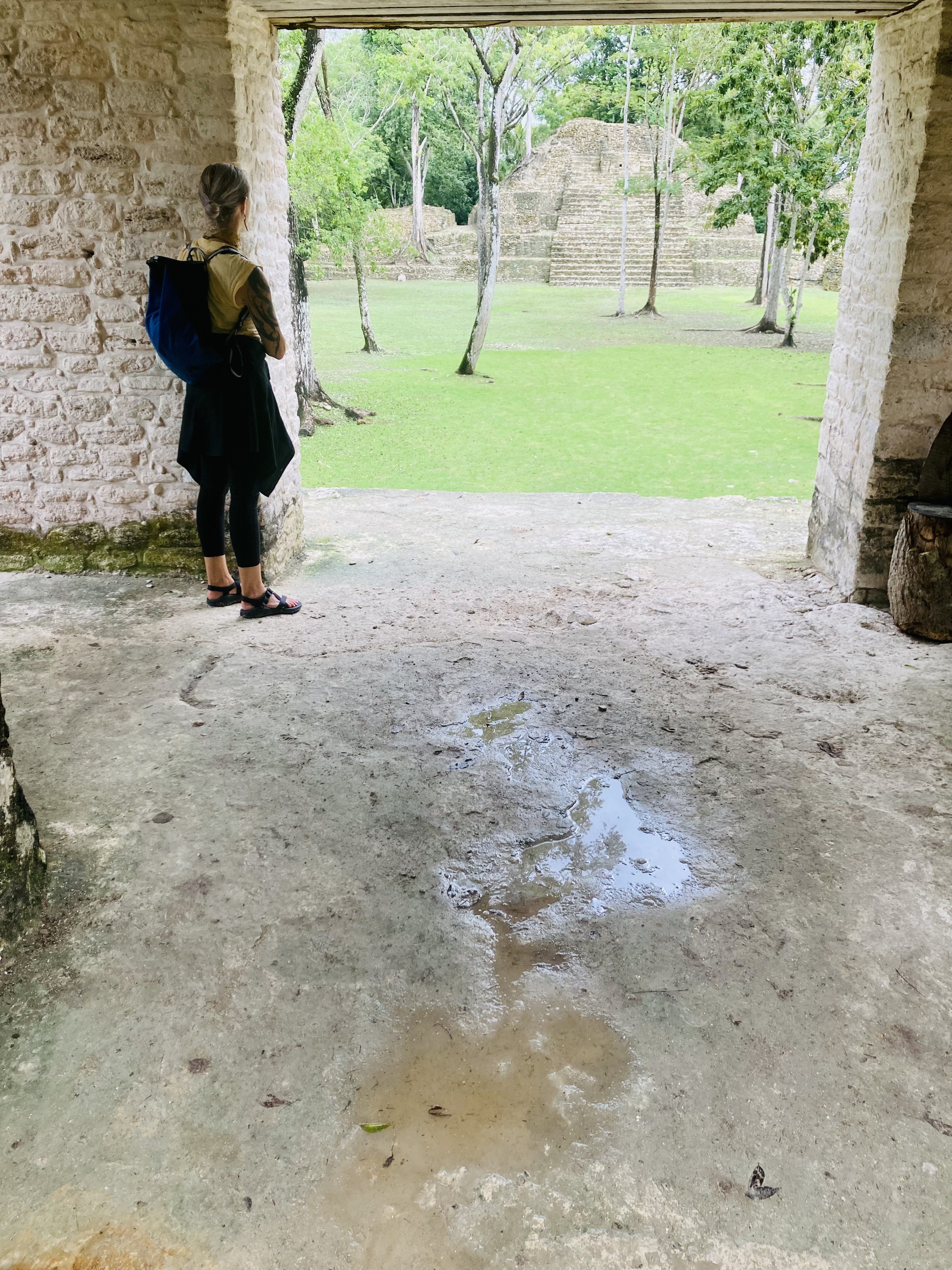
We spent a couple days on the west side of the country where Rasta is from, near Guatemala, and a couple on Placencia, an island in the south. Highlights from this visit were seeing ancient Mayan architecture and the beautiful countryside which is very similar to Costa Rica and Panama, no surprise there.
We made friends with a taxi driver in San Ignacio who stood in the center of town waiting for fares. We’d walk over and ask him where a good restaurant was and he’d point and we’d continue on across the street. The same driver took us to Cahal Pech and let us walk around for an hour then drove us back to town. I got in and looked for a seatbelt to which the taxi driver stated, “You don’t need a seatbelt in Belize.” And both men laughed. Okay, I’ll just freeball this taxi ride then. On the way to Cahal Pech Rasta stopped for some “herbs,” which he then proceeded to roll in the backseat of the taxi. The taxi driver didn’t care at all what we did in his car and true to form as with many Central American taxis, his dashboard was lit up like a Christmas tree. Every single warning light made for that particular year Nissan was illuminated. If a light came on in my Nissan Rogue I skipped the maintenance manual and texted my service adviser at the car dealership who would either explain what it was and how to fix it or tell me to come in right away and they’d squeeze me in. Very different approaches to car ownership and maintenance!
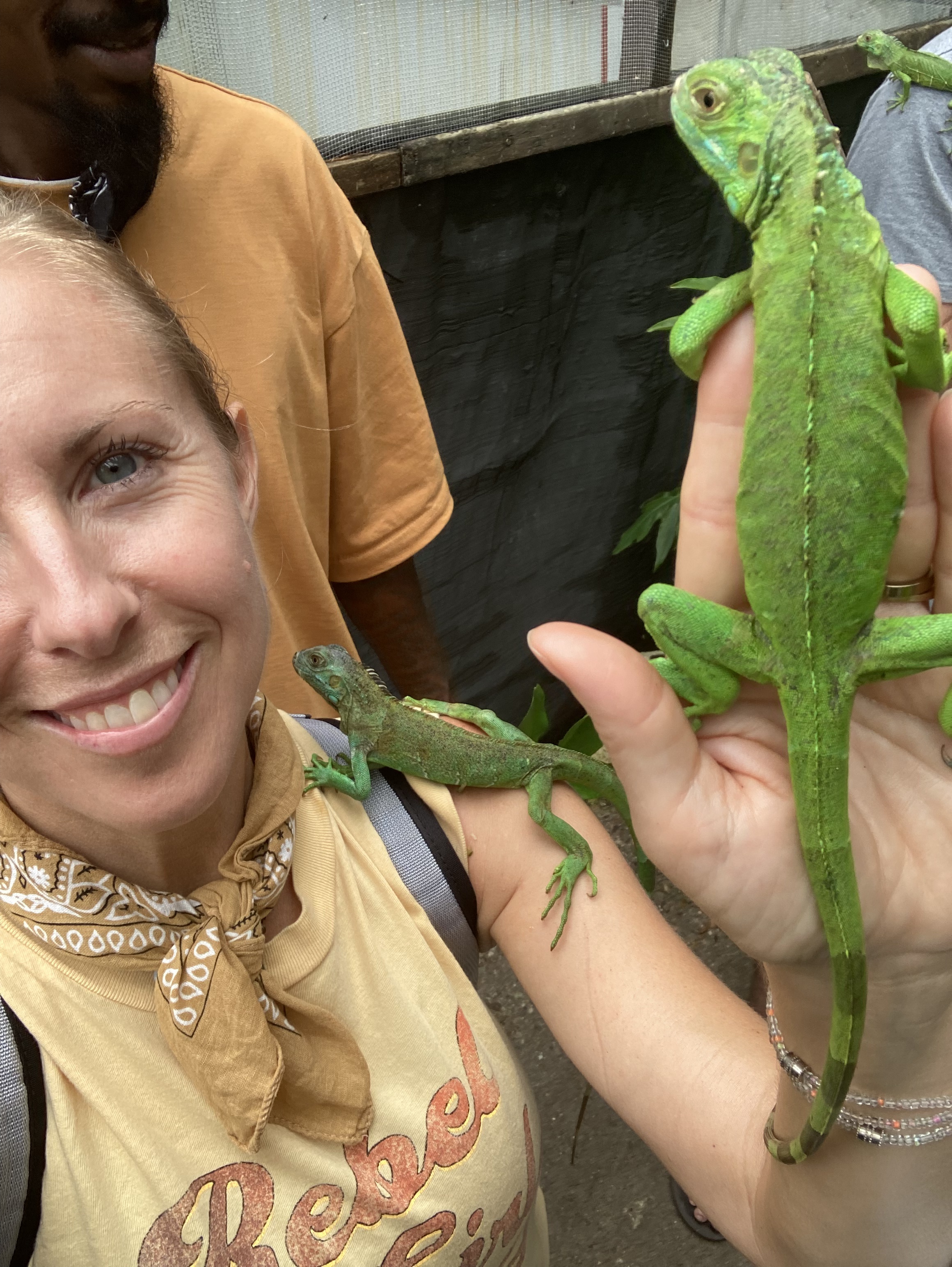
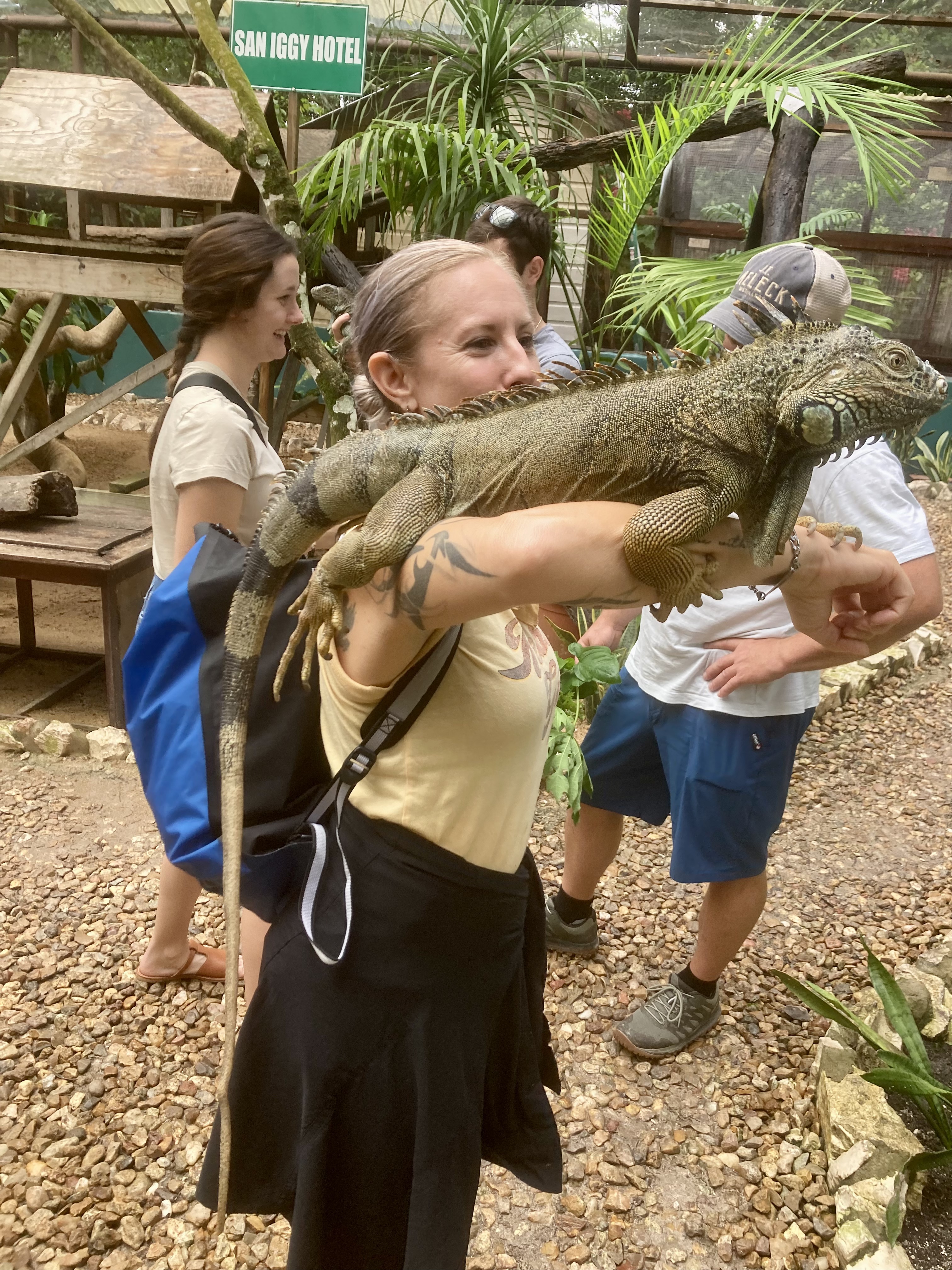
A huge highlight in the western Cayo district was going to the Green Iguana Conservation Project and learning about these cute creatures – and getting to hold them! Another fun moment was watching Rasta order what he thought was an iced coffee which he recently discovered and found highly delicious. What he actually ordered was an iced “tea” and since we were at a Boba cafe, the tea came with huge tapioca pearls in it. He is not a picky eater but he decided big black balls in drinks wasn’t for him. Fair enough, Ras.
The next day we went for breakfast in town and as we told the waitress our plans. She was from Placencia and told us we had already missed the early morning bus from San Ignacio so if we wanted to get there the same day we’d have to hop the 10am bus to Belmopan, get off there for a bus to Independence, ground taxi to water taxi to Placencia. It was something like that.
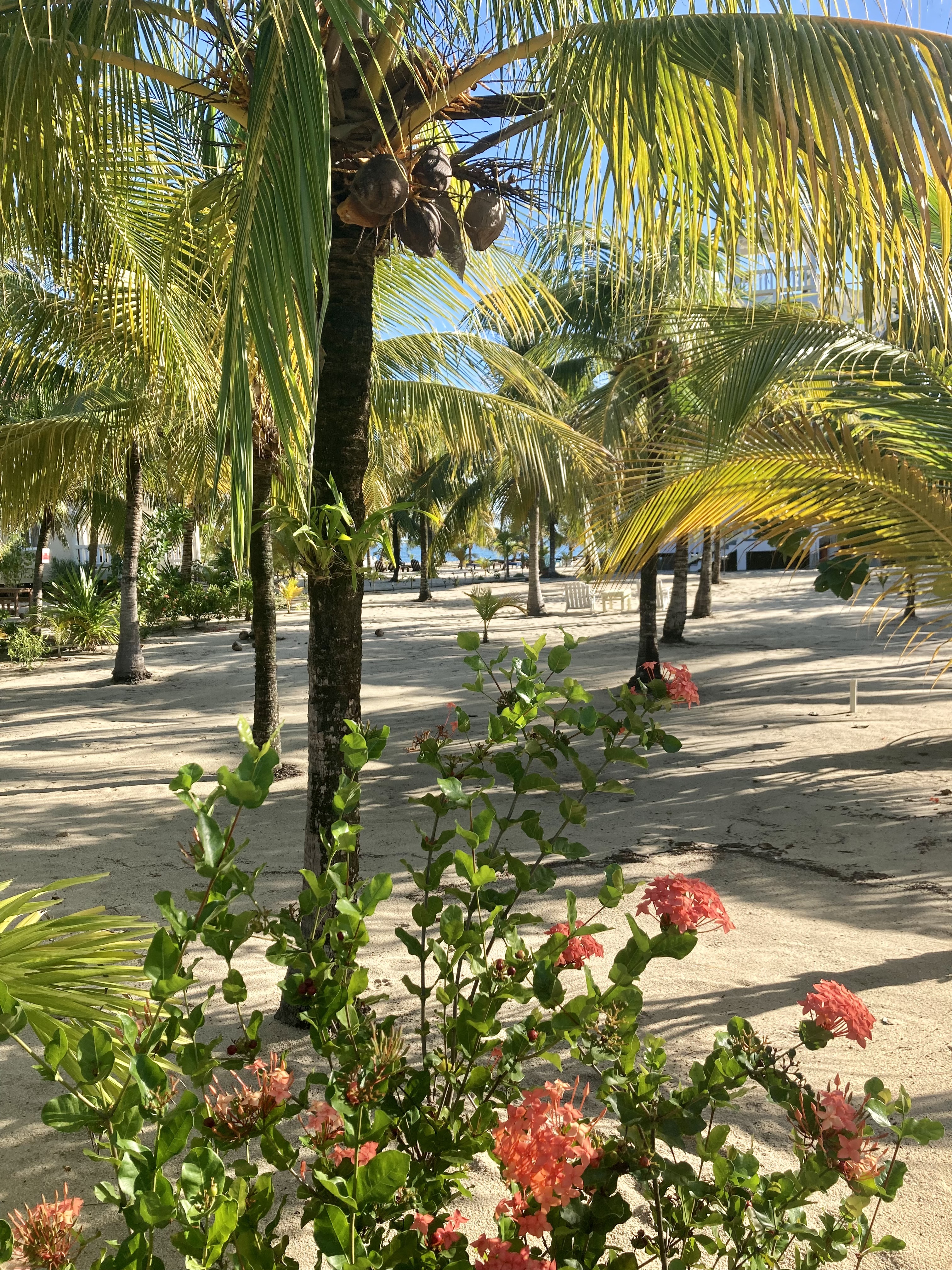
In Placencia the beach and island was even prettier than Caye Caulker, there were great restaurants and cafes and a pretty sidewalk to walk up and down, taking us from the hotel to all of the attractions. We ended the last evening with Rasta taking a chilly plunge in the small pool where we were staying. It reminded him of the clear cool water in Cayo that he used to swim in every day when he was young. The weather held out for us the last four of the five days we were gone and as we arrived by boat back to the island, gray skies greeted us. The next day was nonstop rain with the exception of 47 minutes in the middle of the day. I guess I really am an islander now because I’m familiar enough with the local weather patterns to know I had 47 minutes to hunt down food before the next huge wave of rain. I hopped on my bike and grabbed enough groceries for a few days and as I rode down the last stretch of road home, it started to thunder. Ten minutes later, sheets of rain. Nailed it.




 Pixie in Paradise
Leave a comment